<?xml version="1.0" encoding="UTF-8"?>
<!--Generated by Squarespace Site Server v5.9.2 (http://www.squarespace.com/) on Sun, 14 Mar 2010 21:36:55 GMT--><feed xmlns="http://www.w3.org/2005/Atom" xmlns:dc="http://purl.org/dc/elements/1.1/"><title>The Italian Dish</title><subtitle>Posts</subtitle><id>http://theitaliandishblog.com/imported-20090913150324/</id><link rel="alternate" type="application/xhtml+xml" href="http://theitaliandishblog.com/imported-20090913150324/"/><link rel="self" type="application/atom+xml" href="http://theitaliandishblog.com/imported-20090913150324/atom.xml"/><updated>2010-03-09T12:38:55Z</updated><generator uri="http://www.squarespace.com/" version="Squarespace Site Server v5.9.2 (http://www.squarespace.com/)">Squarespace</generator><entry><title>Hazelnut Semifreddo with Caramel Sauce</title><category term="caramel sauce"/><category term="dessert"/><category term="hazelnuts"/><id>http://theitaliandishblog.com/imported-20090913150324/2010/3/9/hazelnut-semifreddo-with-caramel-sauce.html</id><link rel="alternate" type="text/html" href="http://theitaliandishblog.com/imported-20090913150324/2010/3/9/hazelnut-semifreddo-with-caramel-sauce.html"/><author><name>[Elaine]</name></author><published>2010-03-09T08:26:00Z</published><updated>2010-03-09T08:26:00Z</updated><content type="html" xml:lang="en-US"><![CDATA[<p style="text-align: center;"><span class="full-image-block ssNonEditable"><span>&nbsp;<img style="width: 525px;" src="http://theitaliandishblog.com/storage/open shot semifreddo.jpg?__SQUARESPACE_CACHEVERSION=1268007580269" alt="" /></span></span></p>
<p style="text-align: justify;">When Brian and I were on our great<a href="http://italiandish.squarespace.com/imported-20090913150324/2009/8/2/food-wine-in-oregon.html" target="_blank"> food and wine adventure to <strong>Oregon</strong></a> last summer, we saw lots of orchards that we could not identify. &nbsp;As it turns out they were hazelnut trees. &nbsp;I love hazelnuts. &nbsp;Some people call them filberts. &nbsp;They are the nutty goodness in <a href="http://www.nutellausa.com/" target="_blank">Nutella</a>. &nbsp;Turns out Oregon is the major producer of hazelnuts here in the United States. &nbsp;It was nice to see them used on so many of the restaurant menus in that area, especially in their wine country. &nbsp;I wanted to cook more with them when I got home.</p>
<p style="text-align: justify;">Semifreddo is an Italian dessert which literally means "half cold". &nbsp;It is frozen, but because it has whipped egg whites and whipped cream folded into it, it does not freeze up quite as hard as ice cream. &nbsp;You can make it in any flavor, just like ice cream. &nbsp;In this version, I've made a hazelnut praline first, crushed it up and added it to the semifreddo batter. &nbsp;I wanted just a little something special on top and almost went with a chocolate sauce but I decided a caramel sauce would match the praline in the semifreddo just perfectly. &nbsp;</p>
<p style="text-align: center;"><span class="full-image-block ssNonEditable"><span><img style="width: 575px;" src="http://theitaliandishblog.com/storage/hazelnut%20praline.jpg?__SQUARESPACE_CACHEVERSION=1268014402499" alt="" /></span></span></p>
<p><strong style="font-size: 130%;">Hazelnut Semifreddo with Caramel Sauce</strong></p>
<p>for a printable recipe, <a href="http://sites.google.com/site/elainemccardel/hazelnut-semifreddo-with-caramel-sauce" target="_blank">click here</a></p>
<p>serves 12</p>
<p>(you will need three mixing bowls for this recipe, one large)</p>
<p><em>for the praline:</em></p>
<p>16 oz hazelnuts<br />1 cup sugar<br />1/4 cup water&nbsp;</p>
<p><em>for the semifreddo:</em></p>
<p>1 vanilla bean<br />1/4 cup sugar<br />4 large eggs, separated<br />2 cups heavy cream<br />salt</p>
<p><em>Caramel Sauce:</em></p>
<p>1 cup of sugar<br />6 Tbsp butter<br />1/2 cup heavy whipping cream&nbsp;</p>
<p><strong>Make the hazelnut praline:</strong></p>
<p style="text-align: justify;">You want to remove as much of the skins off the hazelnuts as you can. &nbsp;Do this by placing them on a baking sheet and toasting them at 425 F. for about 4-5 minutes. Immediately wrap them in a clean towel and roll them around in the towel vigorously - this will remove most of the skins. &nbsp;Remove about 4 ounces of the hazelnuts and chop these roughly and set aside (these will go into the bottoms of your loaf pans later). &nbsp;Leave the rest of the hazelnuts whole.</p>
<p style="text-align: center;"><img style="width: 575px;" src="http://theitaliandishblog.com/storage/skinning hazelnuts.jpg?__SQUARESPACE_CACHEVERSION=1268016259041" alt="" /></p>
<p style="text-align: justify;">Line a rimmed baking sheet with foil (Reynolds Wrap makes a <a href="http://www.reynoldspkg.com/reynoldskitchens/en/product.asp?prod_id=1795" target="_blank">nonstick foil</a> that works great for this - in fact, it's the only foil I buy).</p>
<p style="text-align: justify;">Put the sugar and water in a heavy pan and place on medium-high heat. &nbsp;When the sugar is dissolved, it will gradually start to color and turn golden. &nbsp;You can mix this a little with a spatula dipped in water. &nbsp;When it turns a nice golden brown, add the whole hazelnuts, turn the heat down and stir to coat the nuts with the caramel. When the caramel is a dark golden brown, turn it out onto the foil and with the spatula, spread it out. &nbsp;It will cool to a solid sheet. &nbsp;</p>
<p style="text-align: justify;">When the praline is completely cool (it doesn't take long) break it up and put it in your food processor and pulse it just until the pieces are still quite chunky. Remove about half the praline, then pulse the remainder finely. Set these aside. They will both be added at once to the semifreddo mixture.</p>
<p style="text-align: center;"><img style="width: 575px;" src="http://theitaliandishblog.com/storage/semifreddo in pans.jpg?__SQUARESPACE_CACHEVERSION=1268014481674" alt="" /></p>
<p style="text-align: justify;"><strong>Make the semifreddo:</strong></p>
<p style="text-align: justify;">Prepare two small loaf pans (8-1/2 x 4-1/2 x 2-1/2)* by cutting rectangles of parchment paper to fit the bottoms. &nbsp;Line the bottoms of the pans with the paper and spray with a little nonstick cooking spray. &nbsp;Sprinkle half of the roughly chopped hazelnuts in the bottom of each pan.</p>
<p style="text-align: justify;">Remove the seeds from the vanilla bean by slitting the bean with a very sharp small knife down the length and carefully scraping out the seeds. &nbsp;With an electric mixer, whisk the seeds and sugar with the egg yolks in a large bowl until pale. &nbsp;In a second bowl with an electric mixer, beat the cream until soft peaks form. &nbsp;In a third bowl, &nbsp;beat the egg whites with a mixer along with a pinch of salt until they form very firm peaks (if you lift the beater up the mixture forms a peak that goes straight up). &nbsp;Add the hazelnut praline, the cream and the egg whites to the egg yolk mixture. &nbsp;Gently fold in. &nbsp;Place the contents into your loaf pans. &nbsp;Cover with plastic wrap and freeze until serving. &nbsp;</p>
<p style="text-align: justify;">When it's time to serve, run a sharp knife around the sides of the loaf pan and invert pan onto serving platter. The semifreddo should pop out. &nbsp;Remove parchment paper and slice. &nbsp;Drizzle caramel sauce over slices. &nbsp;You can garnish with chopped hazelnuts, if you like.</p>
<p style="text-align: center;"><img style="width: 400px;" src="http://theitaliandishblog.com/storage/caramel sauce.jpg?__SQUARESPACE_CACHEVERSION=1268013981977" alt="" /></p>
<p><strong>Make the caramel sauce:</strong></p>
<p>Place sugar in a heavy 3 quart pan over medium-high heat. As the sugar begins to melt, whisk vigorously. As soon as the sugar comes to a boil, stop stirring. You can swirl the pan a bit if you want, from this point on. As soon as the sugar has melted and is a deep amber color, &nbsp;add the butter to the pan. Whisk until the butter has melted.</p>
<p>Once the butter has melted, take the pan off the heat. Add the cream to the pan and continue to whisk. It is normal for the cream to foam up when it's added - just keep whisking. &nbsp;Whisk until the caramel is smooth and has no lumps. &nbsp;Pour into a heat proof container and let it cool to room temperature. &nbsp;Store in the refrigerator and warm it up a little before serving. &nbsp;</p>
<p>Makes about a cup of caramel sauce.</p>
<p><span class="full-image-block ssNonEditable">&nbsp;</span><em>* You can also make the &nbsp;semifreddo and freeze it just in a plastic container. &nbsp;Serve it just like you would ice cream, in scoops.</em></p>
<p style="text-align: center;"><img style="width: 550px;" src="http://theitaliandishblog.com/storage/pouring caramel sauce.jpg?__SQUARESPACE_CACHEVERSION=1268007682227" alt="" /></p>]]></content></entry><entry><title>Amazing Artisan Bread for 40 Cents a Loaf - No Kneading, No Fussing, No Kidding</title><id>http://theitaliandishblog.com/imported-20090913150324/2010/2/26/amazing-artisan-bread-for-40-cents-a-loaf-no-kneading-no-fus.html</id><link rel="alternate" type="text/html" href="http://theitaliandishblog.com/imported-20090913150324/2010/2/26/amazing-artisan-bread-for-40-cents-a-loaf-no-kneading-no-fus.html"/><author><name>[Elaine]</name></author><published>2010-02-26T09:42:00Z</published><updated>2010-02-26T09:42:00Z</updated><content type="html" xml:lang="en-US"><![CDATA[<p style="text-align: center;"><br /><span class="full-image-block ssNonEditable"><span><img style="width: 475px;" src="http://theitaliandishblog.com/storage/opening%20shot.JPG?__SQUARESPACE_CACHEVERSION=1267046515602" alt="" /></span></span></p>
<p style="text-align: justify;">What if I told you that instead of buying bakery bread for four or five dollars a loaf, you could make delicious handmade bread whenever you wanted, at a fraction of the cost and it is so easy a kid could do it? &nbsp;Well, read on because this method of making artisan bread at home will change your life. &nbsp;</p>
<p style="text-align: justify;"><strong>You can make incredible bread without having to do all the usual time consuming tasks of breadmaking :</strong></p>
<ul>
<li>no need to make a new batch of dough every time you want bread</li>
<li>no need to proof yeast</li>
<li>no need to make starters or prefermented dough</li>
<li>no <strong>kneading!&nbsp;</strong></li>
</ul>
<p style="text-align: justify;">In the last few years, several methods for making easy no-knead bread doughs have crept up on the internet and gained popularity. &nbsp;Among the most popular have been J<a href="http://www.nytimes.com/2006/11/08/dining/08mini.html?_r=1" target="_blank">im Leahy's No-Knead Bread</a> and Jeff Hertzberg and Zoe Francois' <a href="http://astore.amazon.com/theitadis-20/detail/0312362919" target="_blank">Artisan Bread in Five Minutes a Day</a>. &nbsp;These breads drastically cut down the amount of time and work that it was always assumed had to go into artisan bread making. &nbsp;Even the Zen Master of bread making, <a href="http://astore.amazon.com/theitadis-20/detail/1580089984" target="_blank">Peter Reinhart</a>, has jumped onto the bandwagon, admitting that these no knead methods have made him rethink everything he knew about breadmaking:</p>
<p style="text-align: center;"><em>"The results have forced me to reconsider all of the premises I once held sacrosanct".</em></p>
<p style="text-align: justify;">So what is going on here? &nbsp;</p>
<p style="text-align: center;"><span class="full-image-block ssNonEditable"><span><img style="width: 550px;" src="http://theitaliandishblog.com/storage/Boules%20rising.jpg?__SQUARESPACE_CACHEVERSION=1267059429862" alt="" /></span></span></p>
<p style="text-align: center;"><em>Boules Rising and Boules after Baking<br />&nbsp;</em></p>
<p style="text-align: justify;">The key is mixing up a high moisture, or "slack" dough, and letting it do a long fermentation in the refrigerator. It's long been known that a long fermentation contributes flavor to dough but it seems it also develops gluten and eliminates the step of kneading. The advantage in using refrigeration is that you can control the fermentation and you can make up a large batch of dough, enough for four loaves, and keep it in the fridge. &nbsp;If you make a very wet dough, it will be able to last in the refrigerator a long time, gaining flavor as it ferments and allowing you to make bread whenever you decide. This is not to say there is not a place for multi-stage, time-consuming bread making techniques which require 15 minutes of kneading - I love making&nbsp;<a href="http://italiandish.squarespace.com/imported-20090913150324/2008/6/16/focaccia-bread.html" target="_blank">my homemade focaccia</a>, which takes three rises every time I make a batch. &nbsp;But this bread is absolutely a no-brainer. &nbsp;You mix up a big batch of dough in one container, a process which takes only a couple of minutes<em>&nbsp;(remember, there is no proofing of yeast or starters to make)</em>. &nbsp;When you want bread, you cut off a hunk of dough and shape it. You can make various sizes and shapes: boules, batards, rolls or baguettes. It's just so convenient and makes such a beautiful bread with a crackly crust, you won't believe it. &nbsp;I've even shaped the dough into rolls. Peter Reinhart points out that the home baker has an advantage over the commercial baker with this technique - the commercial bakery does not have the refrigeration space to use a method like this. &nbsp;As a home baker, we can make up small batches of dough, refrigerate it and enjoy fresh bread whenever we want it. If you are buying fresh bread three times a week at $4.00 per loaf, you are spending about<strong>&nbsp;$50 a month</strong>&nbsp;on bread! &nbsp;This bread is only about 40 cents a loaf to make. &nbsp;And, since bread is best the day it is made, you don't have to drive to the grocery/bakery to get it every time &nbsp;you want a loaf.</p>
<p style="text-align: justify;">To see how easy it is to get a loaf ready, you can watch me form a loaf in about 30 seconds: (let video load fully).</p>
<p style="text-align: center;"><object width="425" height="344"><param name="movie" value="http://www.youtube.com/v/PUt_Qv_cCsw&hl=en&fs=1"></param><param name="allowFullScreen" value="true"></param><param name="allowscriptaccess" value="always"></param><embed src="http://www.youtube.com/v/PUt_Qv_cCsw&hl=en&fs=1" type="application/x-shockwave-flash" allowscriptaccess="always" allowfullscreen="true" width="425" height="344"></embed></object></p>
<p style="text-align: justify;"><br />This bread is very versatile, also. &nbsp;In both Peter Reinhart's book and Jeff Hertzberg and Zoe Francois' book, they give you many variations of breads made with the master bread recipe in each book. &nbsp;You can make whole wheat breads, cheese breads, herb breads, breads stuffed with sun dried tomatoes, Challah, Semolina Bread and on and on. &nbsp;Jeff Hertzberg and Zoe Francois have come out with another book, <a href="http://astore.amazon.com/theitadis-20/detail/0312545525" target="_blank">"Healthy Breads in Five Minutes a Day"</a>, for people who would like more whole grain recipes and gluten free breads. &nbsp;This is a great book, too, and has lots of wonderful ideas in it. I have all three books and strongly recommend them if you want to try easy bread making. &nbsp;It's nice to be able to make bread whenever the whim hits you - I have several types of doughs in my refrigerator, happily fermenting away. &nbsp;&nbsp;</p>
<p style="text-align: justify;">In these recipes,<strong> instant yeast </strong>is used, which eliminates the need for "proofing" the yeast. &nbsp;Everything is simply mixed together. If you are interested in learning more about yeast, <a href="http://theitaliandishblog.com/imported-20090913150324/2010/1/23/yeast-explained.html" target="_blank">my recent "Yeast Explained" post</a> may be of interest to you. Instant yeast is sometimes labeled "fast acting yeast" and is sold under the names of "Rapid Rise" and "Quick Rise" yeast. &nbsp;Also, Bread Machine yeast is simply instant yeast. &nbsp;I like to buy my yeast in the little jars instead of the packets because I can use only as much as I need out of the jar and it tends to be cheaper.&nbsp;</p>
<p style="text-align: center;"><span class="full-image-block ssNonEditable"><span><img style="width: 350px;" src="http://theitaliandishblog.com/storage/bread%20with%20honey.jpg?__SQUARESPACE_CACHEVERSION=1267110629012" alt="" /></span></span></p>
<p style="text-align: justify;">One way of letting the dough rest and rise is to place it on <a href="http://astore.amazon.com/theitadis-20/detail/B000PRI3TS" target="_blank">a pizza peel</a>, dusted with some cornmeal. &nbsp;This works well <a href="http://italiandish.squarespace.com/imported-20090913150324/2008/2/28/pizza-the-homemade-kind.html" target="_blank">when we make pizzas</a> and pop them right into the oven. &nbsp;However, for this the bread seems to stick because you have to let it sit so long on the pizza peel and rest. &nbsp;So I place a small square of parchment paper on the pizza peel and put the dough right on that. &nbsp;When I slide it into the oven, it goes in along with the parchment paper and bakes up beautifully. &nbsp;If you want an extra crispy crust, just remove the parchment paper halfway through the baking time and return the bread to the pizza stone.</p>
<p style="text-align: justify;">The dough can be stored in any plastic container with a lid or a bowl with plastic wrap loosely placed over it. You want the gases to be able to escape as the dough rises. &nbsp;It is nice to have a dedicated plastic container, though, in the fridge for your dough, because you are going to just keep it in there all the time. &nbsp;Although <a href="http://www.amazon.com/Cambro-Round-Storage-Containers-Quart/dp/B002PMV77G/ref=pd_sim_k_4" target="_blank">these containers</a> are recommended by the authors, I bought a square plastic-lidded container at my local grocery store because I thought it fit in my fridge better. You can see it in the photos below. &nbsp;</p>
<p style="text-align: justify;"><strong><em>So get out a bowl if you don't have a plastic container, mix up a batch of dough and have your first loaf tomorrow. &nbsp;You won't believe it. &nbsp;</em></strong></p>
<p style="text-align: center;"><img style="width: 475px;" src="http://theitaliandishblog.com/storage/bread sliced.jpg?__SQUARESPACE_CACHEVERSION=1267034522455" alt="" /></p>
<p style="text-align: justify;"><span style="font-size: 130%;"><strong>No Knead Artisan Bread</strong></span></p>
<p style="text-align: justify;"><em>adapted from </em><a href="http://astore.amazon.com/theitadis-20/detail/0312362919" target="_blank"><em>Artisan Bread in Five Minutes a Day</em></a></p>
<p style="text-align: justify;">for a printable recipe, <a href="http://elainemccardel.googlepages.com/arisanbread" target="_blank">click here</a><br /><em>makes four 1 pound loaves.</em></p>
<p style="text-align: justify;">3 cups lukewarm water<br />1-1/2 tablespoons granulated fast acting yeast (2 packets)&nbsp;<br />1-1/2 tablespoons kosher or other coarse salt<br />6-1/2 cups unsifted, unbleached all purpose white flour</p>
<p style="text-align: justify;"><strong>Mixing and Storing the Dough</strong></p>
<p style="text-align: justify;">1. &nbsp;<strong>Warm the water slightly.</strong> &nbsp;It should feel just a little warmer than body temperature, about 100 degrees F. Warm water will rise the dough to the right point for storage in about 2 hours. &nbsp;</p>
<p style="text-align: justify;">2. &nbsp;<strong>Add yeast and salt to the water </strong>in a 5 quart bowl or a plastic container with a lid.&nbsp;</p>
<p style="text-align: justify;">3. &nbsp;<strong>Mix in the flour </strong>- kneading is unnecessary. &nbsp;Add all of the flour at once, measuring the flour by scooping it and leveling it off with a knife. &nbsp;Mix with a wooden spoon - do not knead. &nbsp;You're finished when everything is uniformly moist, without dry patches. &nbsp;This step is done in a matter of minutes. &nbsp;The dough should be wet and loose.</p>
<p style="text-align: center;"><img style="width: 525px;" src="http://theitaliandishblog.com/storage/making artisan dough.jpg?__SQUARESPACE_CACHEVERSION=1267037420362" alt="" /></p>
<p style="text-align: justify;">4. &nbsp;<strong>Allow to rise</strong>. Cover with a lid (not airtight). &nbsp;Lidded plastic buckets designed for dough storage can be purchased many places. &nbsp;(I used a plastic square food storage container at my local grocery store. &nbsp;I just make sure that the lid is not snapped on completely). &nbsp;You want the gases to be able to escape a little. &nbsp;Allow the mixture to rise at room temperature until it begins to collapse (or at least flattens on top), about two hours. Longer rising times will not hurt your dough. You can use a portion of the dough any time after this period. Fully refrigerated wet dough is less sticky and is easier to work with than dough at room temperature. &nbsp;So, the first time you try this method, it's best to refrigerate the dough overnight (or at least 3 hours) before shaping a loaf.</p>
<p style="text-align: justify;"><strong>Baking</strong></p>
<p style="text-align: justify;">5. <strong>&nbsp;Shape your loaf</strong>. &nbsp;Place a piece of baking parchment paper on a pizza peel (<em>don't have a pizza peel - use an unrimmed baking sheet or turn a rimmed baking sheet upside down</em>). &nbsp; Sprinkle the surface of your dough in the container with flour. &nbsp;Pull up and cut off about a 1-pound piece of dough (about the size of a grapefruit), using scissors or a serrated knife. &nbsp;Gently stretch the surface of the dough around to the bottom on all four sides, rotating the ball as you go. &nbsp;Dust your hands with flour if you need to. &nbsp;This is just to prevent sticking - you don't want to incorporate the flour into the dough. &nbsp;The top of the dough should be smooth - the object here is to create a "gluten cloak" or "surface tension". &nbsp;It doesn't matter what the bottom looks like, but you need to have a smooth, tight top. &nbsp;This whole step should take about 30 seconds! &nbsp;Place the dough onto your parchment paper.</p>
<p style="text-align: center;"><img style="width: 525px;" src="http://theitaliandishblog.com/storage/cutting dough shaping.jpg?__SQUARESPACE_CACHEVERSION=1267037511201" alt="" /></p>
<p style="text-align: justify;">6. <strong>Let the loaf rise</strong> for about 40 minutes (it does not need to be covered). &nbsp;If it doesn't look like it has risen much, don't worry - it will in the oven. &nbsp;This is called "oven spring".</p>
<p style="text-align: justify;">7. <strong>&nbsp;Preheat a baking stone</strong> on the middle rack in the oven for at least 20 minutes at 450 degrees F. &nbsp;Place an empty rimmed baking pan or broiler pan on a rack below the baking stone. &nbsp;This pan is for holding water for steam in the baking step. &nbsp;<em>(If you don't have <a href="http://astore.amazon.com/theitadis-20/detail/B0000E1FDA" target="_blank">a baking stone,</a> you can use a baking sheet, but you will not get the crisp crust on the bottom. &nbsp;You will still have a great loaf of bread. Baking stones are cheap and easy to find - Target carries them - and are a must for making pizzas, so go out and get one as soon as you can.)</em></p>
<p style="text-align: center;"><em><span class="full-image-block ssNonEditable"><span><img style="width: 525px;" src="http://theitaliandishblog.com/storage/dough rising and slashing.jpg?__SQUARESPACE_CACHEVERSION=1267037563281" alt="" /></span></span><br /></em></p>
<p style="text-align: justify;">8. <strong>Dust the loaf with a little flour and slash the top with a knife</strong>. &nbsp;This slashing is necessary to release some of the trapped gas, which can deform your bread. &nbsp;It also makes the top of your bread look pretty - you can slash the bread in a tic tac toe pattern, a cross, or just parallel slashes. &nbsp;You need a very sharp knife or a razor blade - you don't want the blade to drag across the dough and pull it. &nbsp;As the bread bakes, this area opens and is known as "the bloom". &nbsp;Remember to score the loaves right before baking. &nbsp;</p>
<p style="text-align: justify;">9. &nbsp;<strong>Bake.</strong>&nbsp;&nbsp;Set a cup of water next to your oven. &nbsp;Slide the bread (including the parchment paper) right onto the hot baking stone. &nbsp;Quickly pour the water right into the pan underneath the baking stone and close the oven door. &nbsp;This creates the necessary steam &nbsp;to make a nice crisp crust on the bread. &nbsp;Bake at 450 F for about 25 - 30 minutes. &nbsp;When you remove the loaf from the oven, you will hear it crackle for a while. &nbsp;In baking terms, this is called "sing" and it is exactly what you want. &nbsp;</p>
<p style="text-align: justify;">10. &nbsp;<strong>Cool. </strong>&nbsp;Allow the bread to cool for the best flavor and texture. &nbsp;It's tempting to eat it when it's warm, and that's fine, but the texture is better after the bread has cooled.</p>
<p style="text-align: justify;">11. &nbsp;<strong>Store the remaining dough</strong> in the refrigerator in your lidded (not airtight) container and use for up to 14 days. Every day your bread will improve in flavor. Cut off and shape more loaves as you need them. &nbsp;When your dough is gone, don't clean the container. &nbsp;Go ahead and mix another batch - the remaining bits of dough will contribute flavor to the next batch, much like a sourdough starter does!</p>
<p style="text-align: justify;">Bread is best eaten the day it is baked. Leftover baked bread is best stored at room temperature, unwrapped. Simply place the cut side of the bread on plate or counter<em>. &nbsp;</em></p>
<p style="text-align: center;"><img style="width: 525px;" src="http://theitaliandishblog.com/storage/baguettes.jpg?__SQUARESPACE_CACHEVERSION=1267034559257" alt="" /></p>]]></content></entry><entry><title>Chicken Ragu Sauce Over Orecchiette</title><category term="chicken ragu"/><category term="orecchiette"/><category term="pata"/><id>http://theitaliandishblog.com/imported-20090913150324/2010/2/19/chicken-ragu-sauce-over-orecchiette.html</id><link rel="alternate" type="text/html" href="http://theitaliandishblog.com/imported-20090913150324/2010/2/19/chicken-ragu-sauce-over-orecchiette.html"/><author><name>[Elaine]</name></author><published>2010-02-19T11:33:00Z</published><updated>2010-02-19T11:33:00Z</updated><content type="html" xml:lang="en-US"><![CDATA[<p style="text-align: center;"><span class="full-image-block ssNonEditable">&nbsp;<img style="width: 525px;" src="http://theitaliandishblog.com/storage/Open shot chicken ragu.jpg?__SQUARESPACE_CACHEVERSION=1266435373334" alt="" /></span></p>
<p style="text-align: justify;">This is absolutely one of my favorite pasta sauces. &nbsp;I make a traditional bolognese or ragu sauce frequently from ground beef and pork, but this sauce is very different. &nbsp;I make it from chicken thighs, which I braise, remove from the pot and then shred, removing the meat from the bone. &nbsp;The meat is then placed back into the sauce to cook further. It has a very full, rich flavor from the vegetables, broth, wine and the addition of tomato paste (I used <a href="http://theitaliandishblog.com/imported-20090913150324/2009/9/20/make-your-own-tomato-paste-estratto.html" target="_blank">my homemade estratto</a> from this fall). &nbsp;You can serve this over any pasta. &nbsp;I like orecchiette ("<em>little ears"</em> in Italian) because it holds the sauce so well. &nbsp;This is also great over <a href="http://italiandish.squarespace.com/imported-20090913150324/2008/11/15/how-to-make-homemade-gnocchi.html" target="_blank">homemade gnocchi.</a></p>
<p style="text-align: center;"><span class="full-image-block ssNonEditable">&nbsp;<img style="width: 550px;" src="http://theitaliandishblog.com/storage/horizontal orichiette.jpg?__SQUARESPACE_CACHEVERSION=1266435538318" alt="" /></span></p>
<p style="text-align: justify;"><strong style="font-size: 130%;">Chicken Ragu Sauce Over Orecchiette</strong></p>
<p style="text-align: justify;">serves 4</p>
<p style="text-align: justify;"><em>for a printable recipe,</em><a href="http://elainemccardel.googlepages.com/chickenragusauceoverorecchiette" target="_blank"><em> click here</em></a></p>
<p style="text-align: justify;">1/4 cup olive oil<br />5 chicken thighs, skin removed<br />1/3 cup finely diced carrot<br />1/3 cup finely diced celery<br />1/3 cup finely diced onion<br />large pinch of kosher or sea salt<br />2 cloves garlic, finely minced or grated<br />2 tablespoons tomato paste<br />3/4 cup red wine<br />2 cups chicken broth<br />1 large can whole peeled tomatoes<br />2 bay leaves<br />1 teaspoon dried thyme<br />1 teaspoon dried oregano<br />1 teaspoon kosher or sea salt (or to taste)<br />ground fresh black pepper<br />12 ounces dried orecchiette pasta (or any kind you like)<br />grated parmesan cheese&nbsp;</p>
<p style="text-align: center;"><span class="full-image-block ssNonEditable">&nbsp;<img style="width: 500px;" src="http://theitaliandishblog.com/storage/chicken ragu mise en place.jpg?__SQUARESPACE_CACHEVERSION=1266435585923" alt="" /></span></p>
<p style="text-align: justify;">In a heavy bottom pot, heat the olive oil over medium heat and add the chicken thighs. &nbsp;Let them brown for a few minutes and turn when nicely golden. &nbsp;Let brown on the other side. &nbsp;Remove and set aside. &nbsp;Add the carrot, celery and onion and the large pinch of salt. &nbsp;Stir together and let cook for about 5 minutes. &nbsp;Do not brown, lower heat a little if you have to. &nbsp;Add the garlic and saute for one minute. &nbsp;Add the tomato paste and cook for 2 minutes. &nbsp;Add the wine and cook for another two minutes. &nbsp;Add the chicken broth and tomatoes. Break up the tomatoes with a spoon or your hands (I use my hands and crush them). &nbsp;Add the bay leaves, thyme and oregano and stir. &nbsp;</p>
<p style="text-align: justify;">Return the thighs to the pot, cover, and let simmer on low for about an hour. &nbsp;</p>
<p style="text-align: justify;">Remove the thighs from the pot and place on a cutting board. &nbsp;With two forks, shred the meat off the bones and return the meat to the pot. &nbsp;Add the salt and pepper. &nbsp;Cook, uncovered, for about another 15 minutes. Taste the seasoning, adding more salt if necessary. &nbsp;Continue to cook, uncovered, until you like the thickness of the sauce. &nbsp;</p>
<p style="text-align: justify;">Boil the pasta in plenty of boiling, salted water until al dente. &nbsp;Remove the pasta with&nbsp;<a href="http://astore.amazon.com/theitadis-20/detail/B0000CF4LF" target="_blank">a strainer</a>&nbsp;and place right into the sauce. &nbsp;Stir together and serve right away with grated cheese.</p>
<p style="text-align: center;"><span class="full-image-block ssNonEditable"><img style="width: 550px;" src="http://theitaliandishblog.com/storage/two shot ragu.jpg?__SQUARESPACE_CACHEVERSION=1266435784373" alt="" /></span></p>]]></content></entry><entry><title>The Lost Ravioli Recipes of Hoboken</title><category term="hoboken"/><category term="ravioli"/><id>http://theitaliandishblog.com/imported-20090913150324/2010/2/12/the-lost-ravioli-recipes-of-hoboken.html</id><link rel="alternate" type="text/html" href="http://theitaliandishblog.com/imported-20090913150324/2010/2/12/the-lost-ravioli-recipes-of-hoboken.html"/><author><name>[Elaine]</name></author><published>2010-02-12T11:23:00Z</published><updated>2010-02-12T11:23:00Z</updated><content type="html" xml:lang="en-US"><![CDATA[<p style="text-align: center;">&nbsp;<span class="full-image-block ssNonEditable">&nbsp;<img style="width: 525px;" src="http://theitaliandishblog.com/storage/open shot hoboken ravioli.jpg?__SQUARESPACE_CACHEVERSION=1265750838152" alt="" /></span></p>
<p style="text-align: justify;">When <a href="http://thedaringkitchen.com/" target="_blank">The Daring Kitchen</a> asked me to review <a href="http://astore.amazon.com/theitadis-20/detail/0393334236" target="_blank">&ldquo;The Lost Ravioli Recipes of Hoboken&rdquo;</a> by Laura Schenone, I was excited because I had seen the book before and <a href="http://italiandish.squarespace.com/imported-20090913150324/2008/10/9/roasted-squash-ravioli-with-sage.html" target="_blank">I have quite an interest in making ravioli</a>. &nbsp;This particular ravioli is made with a special rolling pin that has a checkerboard pattern which makes ravioli very quickly. &nbsp;It's a fun method to try and I think if you are a beginner to ravioli, it is an especially easy method.&nbsp;</p>
<p style="text-align: justify;">Laura Schenone is a food writer&nbsp;living in Hoboken, New Jersey who becomes a little obsessed in her search for the origins of the family ravioli recipe.&nbsp; The ravioli was originally made by her Italian great grandmother, Adalgiza, who immigrated to New Jersey from Italy.&nbsp; Her quest for this recipe leads her to long lost cousins and aunts across the country who finally send her the original ravioli recipe.</p>
<p style="text-align: center;"><span class="full-image-block ssNonEditable"><span><a href="http://astore.amazon.com/theitadis-20/detail/B0017GT91W" target="_blank"><img style="width: 425px;" src="http://theitaliandishblog.com/storage/ravioli%20pin.jpg?__SQUARESPACE_CACHEVERSION=1265768661443" alt="" /></a></span></span></p>
<p style="text-align: justify;">When she receives the original recipe, however, it contains a surprising ingredient &ndash; Philadelphia Cream Cheese. &nbsp;Laura is stumped by this &ndash; why on earth would her Italian ancestor make her ravioli with this very American ingredient?&nbsp; The recipe also contains ground veal and ground pork, but they are left raw in the assembly of the ravioli.&nbsp; She had never heard of leaving the meat raw in ravioli.&nbsp; She even consults<a href="http://en.wikipedia.org/wiki/Marcella_Hazan" target="_blank"> Marcella Hazan</a> and <a href="http://www.bugialli.com/" target="_blank">Giuliano Bugialli</a> for answers.&nbsp; They are just as mystified. Her curiosity consumes her and in her search for the answers, she travels to Liguria, from where her great grandparents immigrated and learns ravioli making from all sorts of people. She realizes the absurdity of her quest to find the <em>authentic</em> recipe when she finds herself interviewing Sergio Rossi, director of the Genoa chapter of the organization devoted to conserving the culture and foods of the Mediterranean.&nbsp; He is a little confused about her search for such an authentic recipe and tells her, <em>&ldquo;There is no one taste,&rdquo;</em> he says. <em>&ldquo;Each village has its own way.&nbsp; Each family has its own way.&nbsp; Things vary even within a family.&nbsp; I can share with you my tradition, but not<strong> the</strong> tradition.&rdquo;</em>&nbsp; &nbsp;And there lies the great lesson of the book &ndash; there is no <em>one</em> way to make something.</p>
<p style="text-align: justify;">I made the family&rsquo;s traditional cream cheese ravioli recipe.&nbsp; I was anxious to know what the cream cheese would be like in the filling.&nbsp; This recipe calls for the raw meat, of course, but I couldn&rsquo;t bring myself to do that so I did cook it and then put it through my meat grinder so it would be very fine, which is important when making a filling for ravioli.&nbsp; Otherwise, I made the recipe exactly from the book and it was delicious.&nbsp; I loved the tanginess of the cream cheese.&nbsp; I also liked using the <a href="http://astore.amazon.com/theitadis-20/detail/B0017GT91W" target="_blank">checkered rolling pin</a> because I believe you can make ravioli faster this way and my husband liked the fact that there were no &ldquo;borders&rdquo; around the individual raviolo and so the ravioli were mostly stuffing.</p>
<p style="text-align: justify;"><em>The meats need to be ground fairly fine for ravioli. &nbsp;I used my </em><a href="http://astore.amazon.com/theitadis-20/detail/B00004SGFH" target="_blank"><em>KitchenAid meat grinder attachment</em></a><em>. &nbsp;If you don't have one, you can use your food processor. </em>&nbsp;</p>
<p style="text-align: justify;"><em>If you would like to read the full review I wrote of the book, please go to </em><a href="http://thedaringkitchen.com/cookbook/lost-ravioli-recipes-hoboken" target="_blank"><em>The Daring Kitchen</em></a><em>.</em>&nbsp;</p>
<p style="text-align: center;"><img style="width: 525px;" src="http://theitaliandishblog.com/storage/four shot hoboken ravioli.jpg?__SQUARESPACE_CACHEVERSION=1265767713652" alt="" /></p>
<p style="text-align: justify;"><strong style="font-size: 130%;">Adalgiza and Tessie's Ravioli</strong></p>
<p style="text-align: justify;"><em>adapted from <a href="http://astore.amazon.com/theitadis-20/detail/0393334236" target="_blank">The Lost Ravioli Recipes of Hoboken</a></em></p>
<p style="text-align: justify;">for a printable recipe,<a href="http://elainemccardel.googlepages.com/meatandcheesestuffedravioli" target="_blank"> click here</a></p>
<p style="text-align: justify;"><em>Makes 250-300 ravioli. &nbsp;(I cut the recipe in half when I made it and had over 100 ravioli)</em></p>
<p style="text-align: justify;"><strong>For the pasta:</strong><br />5 cups of flour<br />3 teaspoons of salt<br />2 eggs (I doubled the amount of eggs)<br />1-1/2 cups water, approximately (start slow and use judgment)&nbsp;</p>
<p style="text-align: justify;"><strong>For the Filling:</strong><br />8 ounces cream cheese, <em>room temperature&nbsp;</em><br />1 or 2 boxes frozen chopped spinach, thawed, cooked, and all water squeezed out <em>(I used fresh spinach, about 10 ounces, steamed, water squeezed out and then finely chopped)</em><br />1 pound veal, ground finely&nbsp;<br />1 pound pork, ground finely<br />salt and pepper<br />dash freshly grated nutmeg, to taste<br />2 teaspoons fresh marjoram, finely minced, or 1 teaspoon dry (optional)<br />1 cup Parmigiano-Reggiano&nbsp;<br />3 eggs</p>
<p style="text-align: justify;">Make your pasta dough, wrap in floured plastic, and let it rest. &nbsp;</p>
<p style="text-align: justify;">Brown the meats in a fry pan. &nbsp;Let cool. &nbsp;Run the meat through a grinder (or food processor), so it is very fine.</p>
<p style="text-align: justify;">In a large bowl, cream the cheese with an electric mixer until it is soft. &nbsp;Add the spinach, meats and seasonings. &nbsp;Mix well with a wooden spoon to combine. &nbsp;Add the cheese and eggs.</p>
<p style="text-align: justify;">Roll out the dough very thin (on my rollers, I do not go past #5 for ravioli - otherwise the ravioli can break).</p>
<p style="text-align: justify;">When you have two sheets of dough (or one very long sheet, cut in half) lay one sheet on your workspace, spread some of the filling thinly on the pasta, leaving a half inch border. &nbsp;Lay the other sheet on top. &nbsp;Roll firmly with the <a href="http://astore.amazon.com/theitadis-20/detail/B0017GT91W" target="_blank">checkered pin</a>. &nbsp;Cut the ravioli apart with a <a href="http://astore.amazon.com/theitadis-20/detail/B001BPZS4Q" target="_blank">fluted pastry wheel</a>.</p>
<p style="text-align: center;"><img style="width: 550px;" src="http://theitaliandishblog.com/storage/ravioli step 1.jpg?__SQUARESPACE_CACHEVERSION=1265767768434" alt="" /></p>
<p style="text-align: center;"><img style="width: 550px;" src="http://theitaliandishblog.com/storage/ravioli step 2.jpg?__SQUARESPACE_CACHEVERSION=1265767802878" alt="" /></p>
<p style="text-align: center;"><img style="width: 550px;" src="http://theitaliandishblog.com/storage/ravioli cutting.jpg?__SQUARESPACE_CACHEVERSION=1265767847744" alt="" /></p>
<p style="text-align: justify;">Place the ravioli on a floured sheet pan. &nbsp;(If you want to freeze these, pop the pan into the freezer and place the frozen ravioli in ziplock bags. &nbsp;No need to thaw when you cook them). &nbsp; If you are not cooking the ravioli within an hour, place them in the refrigerator. &nbsp;</p>
<p style="text-align: justify;">Continue to make the ravioli until all your filling is used.</p>
<p style="text-align: justify;">Cook in a large pot of salted water for about 2-3 minutes. &nbsp;Don't let the ravioli boil too vigorously or they may break apart. &nbsp;Remove with a slotted spoon and serve with a little marinara sauce.</p>
<p style="text-align: center;"><img style="width: 550px;" src="http://theitaliandishblog.com/storage/ravioli finished.jpg?__SQUARESPACE_CACHEVERSION=1265767883902" alt="" /></p>]]></content></entry><entry><title>Nutella Bread</title><id>http://theitaliandishblog.com/imported-20090913150324/2010/2/5/nutella-bread.html</id><link rel="alternate" type="text/html" href="http://theitaliandishblog.com/imported-20090913150324/2010/2/5/nutella-bread.html"/><author><name>[Elaine]</name></author><published>2010-02-05T12:36:00Z</published><updated>2010-02-05T12:36:00Z</updated><content type="html" xml:lang="en-US"><![CDATA[<p style="text-align: center;"><span class="full-image-block ssNonEditable">&nbsp;<img style="width: 525px;" src="http://theitaliandishblog.com/storage/Open Shot Nutella Bread.jpg?__SQUARESPACE_CACHEVERSION=1265233193801" alt="" /></span></p>
<p style="text-align: justify;"><strong>It's World Nutella Day</strong>. &nbsp;I'll bet some of you didn't even know that! It's a day created for Nutella lovers by Sara from <a href="http://www.msadventuresinitaly.com/blog/" target="_blank">Ms. Adventures in Italy</a> and Michelle from <a href="http://bleedingespresso.com/" target="_blank">Bleeding Espresso</a>. &nbsp;Bloggers from all around the world post recipes made with Nutella and Sara and Michelle will both have a roundup of all the recipes on February 8th. &nbsp;if you head on over to <a href="http://www.nutelladay.com/" target="_blank">World Nutella Day</a>&nbsp;and click on "Nutella Recipes" you can see recipes from years past.</p>
<p style="text-align: center;"><img style="width: 150px;" src="http://theitaliandishblog.com/storage/logo2010.jpg?__SQUARESPACE_CACHEVERSION=1265233615544" alt="" /></p>
<p style="text-align: justify;">We love this bread. &nbsp;I double the recipe when I make it and bake two loaves at a time and freeze one. &nbsp;Then when my boys come home from college, I can just take one out. &nbsp;It's great for a snack but it's especially good for breakfast with a cappuccino. &nbsp;I keep it sitting on the kitchen island, in a glass domed cake stand, and it looks so pretty. &nbsp;</p>
<p style="text-align: justify;">If you have never bought Nutella, it is a chocolate hazelnut spread that is very popular in Europe. &nbsp;In Italy, it is eaten often at breakfast. &nbsp;You can usually find it in your grocery store right next to the peanut butter.</p>
<p style="text-align: center;"><img style="width: 550px;" src="http://theitaliandishblog.com/storage/4 shot nutella bread.jpg?__SQUARESPACE_CACHEVERSION=1265242487794" alt="" /></p>
<p style="text-align: justify;"><strong style="font-size: 140%;">Nutella Bread</strong></p>
<p style="text-align: justify;"><em>adapted from </em><a href="http://astore.amazon.com/theitadis-20/detail/1600851207" target="_blank"><em>Lauren Chattman's Cake Keeper Cakes</em></a></p>
<p style="text-align: justify;"><em>for a printable recipe, <a href="http://elainemccardel.googlepages.com/nutellabread">click here</a></em></p>
<p style="text-align: justify;">makes one loaf</p>
<p style="text-align: justify;">1-1/2 cups all purpose flour, plus more for dusting<br />1/4 teaspoon salt<br />3/4 teaspoon baking powder<br />2 sticks unsalted butter, room temperature<br />1-1/4 cups sugar<br />4 large eggs, at room temperature<br />2 teaspoons pure vanilla extract<br />One 13-ounce jar Nutella</p>
<p style="text-align: justify;">Preheat the oven to 325 degrees. &nbsp;Lightly grease and flour a 9x5 inch loaf pan, tapping out any excess flour. <em>&nbsp;(I like to brush the loaf pan with melted butter, lay a cut sheet of parchment paper on the bottom of the pan, butter that and then flour the entire inside and then tap out the excess.&nbsp; It ensures that your bread comes out perfectly.)</em> &nbsp;In a medium bowl, whisk the 1-1/2 cups of flour with the baking powder and salt and set aside.</p>
<p style="text-align: justify;">In a large bowl beat the butter with the sugar at medium-high speed until fluffy, about 3 minutes. &nbsp;With the mixer at medium-low speed, add the eggs, one at a time, making sure each one gets incorporated before adding the next one. &nbsp;Add the vanilla extract. &nbsp;Add the flour mixture in 3 batches, beating at low speed between additions until incorporated. &nbsp;Continue to beat for 30 seconds longer.</p>
<p style="text-align: justify;">Spread one-third of the batter in the prepared pan, then spread half of the Nutella on top. &nbsp;Repeat with another third of the batter and the remaining Nutella. &nbsp;Top with the remaining batter. &nbsp;Lightly swirl the Nutella into the batter with a butter knife. &nbsp;Do not overmix.</p>
<p style="text-align: justify;">Bake the cake for about 1 hour and 10 minutes, until a toothpick inserted in the center comes out clean. &nbsp;Let the cake cool in the pan for 15 minutes. &nbsp;Invert the cake onto a wire rack, turn it right side up and let cool completely, about 2 hours. &nbsp;Cut the cake into slices and serve.</p>
<p style="text-align: justify;"><em><strong>The pound cake can be &nbsp;kept in an airtight container at room temperature for up to 3 days. &nbsp;It can also be wrapped tightly and frozen.</strong></em></p>
<p style="text-align: center;"><span class="full-image-block ssNonEditable"><span><img style="width: 450px;" src="http://theitaliandishblog.com/storage/Closing%20shot%20nutell%20abread.jpg?__SQUARESPACE_CACHEVERSION=1265242616018" alt="" /></span></span></p>]]></content></entry><entry><title>Corzetti, Italian Pasta Discs</title><category term="corzetti"/><category term="pasta"/><id>http://theitaliandishblog.com/imported-20090913150324/2010/1/29/corzetti-italian-pasta-discs.html</id><link rel="alternate" type="text/html" href="http://theitaliandishblog.com/imported-20090913150324/2010/1/29/corzetti-italian-pasta-discs.html"/><author><name>[Elaine]</name></author><published>2010-01-29T08:38:00Z</published><updated>2010-01-29T08:38:00Z</updated><content type="html" xml:lang="en-US"><![CDATA[<p style="text-align: center;"><span class="full-image-block ssNonEditable">&nbsp;<img style="width: 575px;" src="http://theitaliandishblog.com/storage/openshotcorzetti.jpg?__SQUARESPACE_CACHEVERSION=1264538485636" alt="" /></span></p>
<p style="text-align: justify;">I love to make hand crafted pasta and corzetti are such fun to make. &nbsp; They are pasta discs that are stamped with a design, which helps to hold a sauce. &nbsp;They are a regional pasta to Liguria in Italy. &nbsp; In medieval times, they were stamped with the Genovese family crests. To make them by hand, you must have a corzetti stamp.</p>
<p style="text-align: center;"><span class="full-image-block ssNonEditable"><img style="width: 500px;" src="http://theitaliandishblog.com/storage/corzetti%20stamps.jpg?__SQUARESPACE_CACHEVERSION=1264538824928" alt="" /></span></p>
<p style="text-align: justify;">The corzetti stamp consists of two pieces. &nbsp;One piece, the base, has a hollowed out side, for cutting the pasta discs. &nbsp;The other side of the base has a design and is the side on which you lay the pasta disc. &nbsp;The other piece of each corzetti set is the stamp, with a handle. &nbsp;This has a different design than the base.</p>
<p style="text-align: justify;">&nbsp;</p>
<p style="text-align: center;">&nbsp;<em>Cut out discs of pasta with the cutting side of the stamp. (below, left)</em></p>
<p style="text-align: center;"><em>Place cut pasta disc on top of the corzetti base. (below, right)</em></p>
<p style="text-align: center;"><span class="full-image-block ssNonEditable">&nbsp;<img style="width: 550px;" src="http://theitaliandishblog.com/storage/corzetti1.jpg?__SQUARESPACE_CACHEVERSION=1264538574209" alt="" /></span></p>
<p style="text-align: center;"><em>Take stamp top and press onto disc. (below)</em></p>
<p style="text-align: center;"><span class="full-image-block ssNonEditable"><img style="width: 550px;" src="http://theitaliandishblog.com/storage/corzetti2.jpg?__SQUARESPACE_CACHEVERSION=1264538608044" alt="" /></span></p>
<p style="text-align: center;"><em>You now have a disc with two different designs, one on each side. (below)</em></p>
<p style="text-align: center;"><span class="full-image-block ssNonEditable"><img style="width: 550px;" src="http://theitaliandishblog.com/storage/corzetti 3.jpg?__SQUARESPACE_CACHEVERSION=1264538630396" alt="" /></span></p>
<p style="text-align: justify;">Corzetti stamps are not easy to find. &nbsp;There is a master craftsman, <a href="http://www.francocasoni.it/" target="_blank">Franco Casoni</a>, who lives in a small town, Chiaveri, and he hand carves these stamps and has supplied them to places like <a href="http://www.agferrari.com/index.php/item/department/Kitchen%20Tools/item/2363.html" target="_blank">A. G. Ferrari</a>&nbsp;. &nbsp;They are very hard to come by right now and A.G. Ferrari are usually out of stock. &nbsp;You can call them to see if they will be getting any in the future. I understand that <a href="http://www.cortibros.biz/tek9.asp?pg=products&amp;specific=jpkpppj8" target="_blank">Corti Brothers</a> sometimes has them. &nbsp;If you are lucky enough to be in that area of Italy, near Genoa, you can stop in at Signore Casoni's shop and he will actually carve you a stamp right on the spot, with whatever design you like. For some fun accounts of people doing exactly that, read <a href="http://www.slowtrav.com/blog/palma/2008/09/chiavari_and_genoa.html" target="_blank">this delightful post by a Slow Traveler</a> who went to Chiaveri (she's also posted photos of Franco) and&nbsp;<a href="http://divinacucina.blogspot.com/2006/10/divina-destinations-chiaveri.html" target="_blank">Divina Cucina's post</a> about Franco and the stamp he made her. &nbsp;&nbsp;</p>
<p style="text-align: center;"><em><span class="full-image-block ssNonEditable"><img style="width: 525px;" src="http://theitaliandishblog.com/storage/twoshotcorzetti.jpg?__SQUARESPACE_CACHEVERSION=1264539999754" alt="" /></span></em></p>
<p style="text-align: justify;"><span style="font-size: 130%;"><strong>Corzetti with Parmesan, Pine Nuts and Herbs</strong></span></p>
<p style="text-align: justify;">for a printer friendly recipe, <a href="http://elainemccardel.googlepages.com/corzetti" target="_blank">click here</a></p>
<p style="text-align: justify;"><em>It is common in Liguria to add a little wine to the pasta dough.</em></p>
<p style="text-align: justify;"><em>makes about 90 corzetti</em></p>
<p style="text-align: justify;"><strong>Dough</strong>:</p>
<p style="text-align: justify;">1 cup all purpose flour or Italian 00 flour<br />4 egg yolks<br />1/4 cup white wine</p>
<p style="text-align: justify;"><strong>Sauce:</strong></p>
<p style="text-align: justify;">1/3 cup olive oil<br />2 cloves garlic, minced or grated<br />1/8 cup pine nuts, plain or toasted*<br />handful of chopped herbs (parsley, basil, etc.)<br />freshly ground black pepper, salt to taste<br />freshly grated parmigiano reggiano cheese&nbsp;</p>
<p style="text-align: justify;"><strong>Make pasta dough:</strong>&nbsp;Place flour on workspace and make a well in the center. &nbsp;Place the egg yolks in the well and beat lightly with fork. Add white wine to beaten eggs and mix with the fork. &nbsp; Slowly incorporate the flour with the fork until a dough forms. &nbsp;Knead and add flour until the dough is not sticky any more. A pastry scraper helps a lot. &nbsp;This may take a little more flour - you need to just go by the feel of the dough. &nbsp;Wrap in floured plastic and let rest at room temperature for 15 - 30 minutes. &nbsp;Cut in half and take each piece and run it through pasta rollers on the widest setting. &nbsp;Fold in thirds and run through several more times. Adjust rollers to next thinnest setting and pass pasta through. Pass through until you get to the thickness you like - usually #4 or #5 for corzetti. &nbsp;If you make the pasta thinner, using #5, you will be able to make a few more corzetti. Lay pasta sheets on floured counter and cover with towel.</p>
<p style="text-align: justify;">Cut out discs of pasta with your corzetti base and lay on sheet of parchment paper on a baking sheet. &nbsp;You can take your scraps and run them through the pasta rollers again to get the maximum number of corzetti. Repeat until all pasta has been used and you have 80 - 100 discs of pasta. &nbsp;</p>
<p style="text-align: center;"><img style="width: 550px;" src="http://theitaliandishblog.com/storage/horizontal corzetti.jpg?__SQUARESPACE_CACHEVERSION=1264559974939" alt="" /></p>
<p style="text-align: justify;"><strong>Stamp corzetti:</strong> &nbsp;Turn corzetti base so design is right side up. &nbsp;Place one pasta disc on the base. &nbsp;Take the corzetti stamp and press down. &nbsp;Remove pasta disc to parchment. &nbsp;If pasta sticks to stamp, lightly flour. Repeat until all discs are stamped.</p>
<p style="text-align: justify;">Place corzetti in boiling, salted water and cook two minutes. &nbsp;Lift with <a href="http://astore.amazon.com/theitadis-20/detail/B0000CF4LF" target="_blank">a strainer</a> and dress with sauce.</p>
<p style="text-align: justify;"><em>(You can place the corzetti in the freezer on the baking sheets and then put them in plastic bags and keep in the freezer, if you like. &nbsp;No need to thaw to cook them.)</em></p>
<p style="text-align: justify;"><strong>Sauce:</strong> &nbsp;Heat olive oil in a skillet and saute garlic for one minute. &nbsp;Add pine nuts and herbs. &nbsp;Add pepper and salt to taste. When corzetti are done cooking, lift them out with a strainer and place right into skillet. &nbsp;Toss with sauce. &nbsp;Place pasta in a serving bowl and toss with as much freshly grated parmesan cheese as you like.</p>
<p style="text-align: justify;"><em>* To toast pine nuts (this brings out their flavor a little more) place in a small, dry skillet and toast over medium heat until lightly golden.</em></p>
<p style="text-align: justify;">&nbsp;</p>
<p style="text-align: center;"><span class="full-image-block ssNonEditable"><img style="width: 550px;" src="http://theitaliandishblog.com/storage/closingcorzetti.jpg?__SQUARESPACE_CACHEVERSION=1264538651987" alt="" /></span></p>
<p style="text-align: center;"><em>&nbsp;Corzetti with pine nuts, parmesan and herbs.</em></p>]]></content></entry><entry><title>Yeast Explained</title><category term="baking"/><category term="yeast"/><id>http://theitaliandishblog.com/imported-20090913150324/2010/1/23/yeast-explained.html</id><link rel="alternate" type="text/html" href="http://theitaliandishblog.com/imported-20090913150324/2010/1/23/yeast-explained.html"/><author><name>[Elaine]</name></author><published>2010-01-23T14:00:00Z</published><updated>2010-01-23T14:00:00Z</updated><content type="html" xml:lang="en-US"><![CDATA[<p style="text-align: justify;">Have you ever wondered which yeast you should use when baking? &nbsp;What's the difference between active dry yeast and instant yeast? &nbsp;What the heck is compressed yeast and fresh yeast? &nbsp;Can you use Rapid Rise yeast if a recipe calls for active dry yeast? &nbsp;Well, I've wanted to do a yeast post for a while now. &nbsp;I get asked from time to time about the differences in yeast and I know there is a lot of mystery about it. &nbsp;So I'm going to clear it up for you and demystify the whole yeast question.</p>
<p style="text-align: justify;">I use yeast a lot. &nbsp;We make homemade pizza once a week, I'm always making focaccia and other breads and my yeast of choice is instant dry yeast. &nbsp;I have no brand loyalty on this - I buy Rapid Rise or Quick Rise, whatever the store has. &nbsp;I keep it in the refrigerator, although it has a very long shelf life, but I try to bring it to room temperature before I use it. &nbsp;Let me explain why I use the instant kind.</p>
<p style="text-align: justify;">First of all, there are basically <strong>two kinds of yeast</strong> - fresh, compressed yeast in cakes and dry yeast. &nbsp;Fresh yeast is something most people do not use anymore and many stores don't bother to carry it. &nbsp;It has a very short shelf life (two weeks or less) and is highly perishable. &nbsp;Because of this, manufacturers developed dried yeast, or "<strong>active dry yeast</strong>." &nbsp;It enables yeast to be stored for a long time. &nbsp;In this particular drying process, some yeast cells are killed and so that is why it is best to "proof" active dry yeast in some warm liquid, to make sure that enough yeast cells are still alive to do the trick with your dough. &nbsp;Manufacturers got even more clever and came up with a different drying process, one that left a whole lot more yeast cells alive - this is<strong>&nbsp;"instant dry yeast"</strong>, better known as Rapid Rise (Fleischmann's brand) or Quick Rise (Red Star brand) or Perfect Rise (SAF brand). They do not require proofing or rehydration to work. &nbsp;They are designed to be added right in with your dry ingredients. &nbsp;These instant dry yeasts are all the same thing and are packaged the same, also - in 1/4 ounce little envelopes. Instant, or quick rising yeasts, will do the job of rising your doughs about 50% faster. They are more stable and reliable and a lot of people prefer them. &nbsp;Also, the yeasts that are labeled "For Bread Machines" are instant yeasts.</p>
<p style="text-align: center;"><img style="width: 450px;" src="http://theitaliandishblog.com/storage/yeast.JPG?__SQUARESPACE_CACHEVERSION=1263570677966" alt="" /></p>
<p style="text-align: justify;">Are they interchangeable? &nbsp;Remember, the biggest difference is that active dry yeast needs to be proofed and instant yeast does not. &nbsp;Aside from that, you can substitute one for the other in a recipe - you just use a little less instant yeast if a recipe calls for active dry yeast. &nbsp; <a href="http://peterreinhart.typepad.com/about.html" target="_blank">Peter Reinhart</a>, the Zen master of bread baking, actually <strong>prefers instant dry yeast</strong> because it is easier to use, it's stronger and you need less of it. &nbsp;In fact, he believes instant yeast will be the most used someday because of all of its strong points. &nbsp;His formula for switching them is this:</p>
<p style="text-align: justify;"><em>Multiply the amount of instant yeast by 1.25 for the equivalent of active dry yeast.</em></p>
<p style="text-align: justify;">Basically, &nbsp;you use 25% less of instant yeast than active dry. &nbsp; Frankly, I'm very loosey goosey with my yeast measuring. &nbsp;Because I use instant yeast and I don't have to proof it, I know it's going to do the trick, no matter if I use 1 teaspoon or 1-1/2 teaspoons. &nbsp;I usually just eyeball it in my hands, unless I'm making a recipe that I am not familiar with and then I actually get out the measuring spoons. &nbsp;But I've made focaccia and pizza dough hundreds of time and I'm beyond measuring. See? &nbsp;It's not that scary. &nbsp;Instant yeast will just make your dough rise faster.</p>
<p style="text-align: justify;">Why use active dry yeast, then, over instant yeast? &nbsp;Some people believe they can taste the difference, but this is really in the rising times, not which yeast you use. The less yeast that goes into a dough and the longer the dough rises, the better the flavor the dough will have. &nbsp;Bakers know slow rises are better for taste, but, as I said, this is a function of the length of time the dough is allowed to rise, not which type of yeast you use. Remember, yeast is yeast is yeast. &nbsp;It's all the same - if you want a slow rise and you are using instant yeast, <em>just use less</em>.</p>
<p style="text-align: justify;"><a href="http://judithjonescooks.com/2009/08/06/what-would-julia-have-thought/" target="_blank">Judith Jones</a> (the editor who originally got Julia Child published) writes a funny story about the yeast debate in her book, <a href="http://astore.amazon.com/theitadis-20/detail/0307264955" target="_blank">"The Tenth Muse - My Life in Food"</a>. &nbsp;She recounts working with the legendary <a href="http://www.harpercollins.com/authors/4331/Marcella_Hazan/index.aspx" target="_blank">Marcella Hazan</a> in her early days on a cookbook and clashing with her over the use of acive dry yeast. &nbsp;Marcella insisted on using fresh, compressed cake yeast but Judith Jones thought this was not practical for the average American home cook and suggested the recipe call for the more modern active dry yeast. &nbsp;Marcella was doubtful, saying that the taste would not be right. &nbsp;She insisted they do a taste test and so she baked breads with both kinds of yeast. &nbsp;No one (not even the great <a href="http://www.jamesbeard.org/index.php?q=about_james_beard" target="_blank">James Beard</a>, who was invited to take part) could tell the difference between the breads.</p>
<p style="text-align: center;"><img style="width: 525px;" src="http://theitaliandishblog.com/storage/dough.JPG?__SQUARESPACE_CACHEVERSION=1263929683693" alt="" /></p>
<p style="text-align: justify;"><strong><em>Some helpful notes on using yeast:&nbsp;</em></strong></p>
<p style="text-align: justify;">Instant Yeasts are Rapid Rise (Fleischmann's), Perfect Rise(Red Star) &nbsp;and Quick Rise (SAF). &nbsp;They're all the same thing.</p>
<p style="text-align: justify;">No rehydration is required of instant yeasts. &nbsp;Fleischmann's says on their web site that&nbsp;<span>RapidRise&trade; yeast actually loses its fast rising capabilities if dissolved in liquid, and will require two complete rises.</span>&nbsp;&nbsp;I assume that holds true for other instant yeasts.</p>
<p style="text-align: justify;">Active Dry yeast has larger granules and is necessary to dissolve completely for the yeast to work. Therefore, Active Dry works best if dissolved in warm water (100&deg; to 110&deg;F).</p>
<p style="text-align: justify;">One envelope (2-1/4 tsp) of yeast (active dry or instant) can raise 4 cups of flour (or about 1 pound)</p>
<p style="text-align: justify;">Yeast dies at 140 degrees F, so be sure that the liquid you add to your dough is not hot. &nbsp;It should be warm, about 95 - 110 degrees F. &nbsp;Use a thermometer until you remember how warm it should feel and then you can just do it by touch. &nbsp;Mr. Food Science himself, <a href="http://www.curiouscook.com/cook/home.php" target="_blank">Harold McGee</a>, says that yeast activity is best at 95 degrees F/35 degrees C.</p>
<p style="text-align: justify;">Salt can kill yeast or decrease its effectiveness if it comes in direct contact. &nbsp;For this reason, add the salt in a recipe along with the bulk of the flour, when you add that.</p>
<p style="text-align: justify;">1 envelope of yeast is about 2 -1/4 teaspoons.</p>
<p style="text-align: justify;">You don't have to refrigerate yeast, but if you do, it's better to bring it to room temperature before using.</p>
<p style="text-align: justify;">Some recipes using yeast:</p>
<p style="text-align: justify;"><a href="http://italiandish.squarespace.com/imported-20090913150324/2008/2/28/pizza-the-homemade-kind.html">How to Make Homemade Pizza</a></p>
<p style="text-align: justify;"><a href="http://italiandish.squarespace.com/imported-20090913150324/2008/6/16/focaccia-bread.html">How to Make Focaccia Bread</a></p>
<p style="text-align: justify;"><a href="http://theitaliandishblog.com/imported-20090913150324/2008/3/19/italian-easter-bread.html">Italian Easter Bread</a></p>
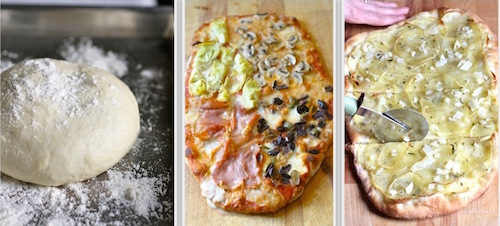
<p style="text-align: justify;"><span class="full-image-block ssNonEditable"><span><a href="http://theitaliandishblog.com/imported-20090913150324/2009/5/23/pizza-quattro-stagioni.html"><img style="width: 150px;" src="http://theitaliandishblog.com/storage/Page_3.jpg?__SQUARESPACE_CACHEVERSION=1263930953959" alt="" /></a></span><span class="thumbnail-caption" style="width: 150px;">Pizza Quattro Stagioni</span></span></p>]]></content></entry><entry><title>A Chapter Ends. . .</title><id>http://theitaliandishblog.com/imported-20090913150324/2010/1/16/a-chapter-ends.html</id><link rel="alternate" type="text/html" href="http://theitaliandishblog.com/imported-20090913150324/2010/1/16/a-chapter-ends.html"/><author><name>[Elaine]</name></author><published>2010-01-16T14:54:25Z</published><updated>2010-01-16T14:54:25Z</updated><content type="html" xml:lang="en-US"><![CDATA[<p style="text-align: center;">Sorry that I won't be posting a recipe this week, but I've lost a sweet, old friend. &nbsp;See you next week.</p>
<p style="text-align: center;"><span class="full-image-block ssNonEditable"><img style="width: 550px;" src="http://theitaliandishblog.com/storage/IMG_0801.JPG?__SQUARESPACE_CACHEVERSION=1263653776476" alt="" /></span></p>
<p style="text-align: center;"><strong style="font-size: 120%;"><span style="font-size: 120%;">Sadie</span></strong></p>
<p style="text-align: center;"><span style="font-size: 120%;">1994 - 2010</span></p>
<p style="text-align: center;"><span style="font-size: 120%;"><em>Rest in Peace</em></span></p>]]></content></entry><entry><title>Harvest Grape Bread and a Tribute to Dorothy Gaiter and John Brecher</title><category term="Dorothy Gaiter and John Brecher"/><category term="appetizer"/><category term="bread"/><id>http://theitaliandishblog.com/imported-20090913150324/2010/1/8/harvest-grape-bread-and-a-tribute-to-dorothy-gaiter-and-john.html</id><link rel="alternate" type="text/html" href="http://theitaliandishblog.com/imported-20090913150324/2010/1/8/harvest-grape-bread-and-a-tribute-to-dorothy-gaiter-and-john.html"/><author><name>[Elaine]</name></author><published>2010-01-08T22:55:00Z</published><updated>2010-01-08T22:55:00Z</updated><content type="html" xml:lang="en-US"><![CDATA[<p style="text-align: center;"><span class="full-image-block ssNonEditable">&nbsp;<img style="width: 515px;" src="http://theitaliandishblog.com/storage/Open Shot Harvest Grape.jpg?__SQUARESPACE_CACHEVERSION=1262906428147" alt="" /></span></p>
<p style="text-align: justify;">This bread is one of my favorite things to serve as an appetizer with some wine, cheese and olives. &nbsp;It's a pull-apart bread that is scented with cinnamon and cardamom and is slightly sweet, made with a little milk and sugar. It's really delicious. &nbsp;I got the recipe several years ago out of one of my favorite all time books,<a href="http://astore.amazon.com/theitadis-20/detail/0812966864" target="_blank">&nbsp;"Love by the Glass"</a>&nbsp;by&nbsp;<a href="http://online.wsj.com/article/tastings.html" target="_blank">Dorothy Gaiter and John Brecher</a>, the long time wine writers for the&nbsp;<a href="http://online.wsj.com/home-page" target="_blank">Wall Street Journal</a>. &nbsp;Their column, which ran for twelve years, was called "Tastings" and Brian and I religiously read it. &nbsp;In addition to writing about wine, John and Dottie always snuck in little bits about their own life and children and if you were a long time reader, you got to feel like you knew them a little. &nbsp;After I read their book, which is really a memoir of their life together, their love of wine and some favorite recipes, I&nbsp;<em>really</em>&nbsp;felt like I knew them. &nbsp;I've read "Love by the Glass" three times over the last few years and it's more charming and funny every time I read it. &nbsp;So we were stunned this past week when we read, at the bottom of their column, these words:</p>
<p style="text-align: justify;"><em>"This is our 579th&mdash;and last&mdash;"Tastings" column. The past 12 years&mdash;a full case!&mdash;have been a joy, not because of the wine but because we had an opportunity to meet so many of you, both in person and virtually. Thank you."</em></p>
<p style="text-align: justify;">Huh? &nbsp;We couldn't believe it. &nbsp;No explanation, nothing. &nbsp;I haven't been able to find any information on what happened or what they are going to do now. &nbsp;Their Facebook page is just full of people expressing good wishes to them, but no word from them. &nbsp;Hopefully, they will resurface on the web somewhere with their excellent writing. &nbsp;Until then, I think I'll curl up with their book again and reread some of their fun stories. &nbsp;This bread was their most requested recipe.</p>
<p style="text-align: center;"><img style="width: 550px;" src="http://theitaliandishblog.com/storage/horizontal bread grape.jpg?__SQUARESPACE_CACHEVERSION=1262978871734" alt="" /></p>
<p style="text-align: justify;"><strong style="font-size: 130%;">Harvest Grape Bread</strong></p>
<p><em>for a printable recipe,<a href="http://sites.google.com/site/recipesfortheitaliandish/harvest-grape-bread-1" target="_blank"> click here</a></em></p>
<p>2.5 to 3 cups all-purpose flour<br />1 package dry yeast (active or rapid rise)<br />1/4 teaspoon ground cardamom<br />1/4 teaspoon group nutmeg<br />3/4 cup whole milk<br />1/4 cup sugar<br />3 tablespoons butter<br />1 teaspoon salt<br />2 Tablespoons orange liqueur or orange juice (I used Cointreau)<br />2 egg whites, separated<br />Poppy seeds (optional)</p>
<p>Combine 1-1/4 cups of the flour, the yeast, cardamom and nutmeg in a bowl. &nbsp;If you have a stand mixer, like a KitchenAid, put the ingredients in the bowl&nbsp;of your stand mixer. &nbsp;It's much easier to make the bread in a stand mixer.</p>
<p>Heat together gently the milk, sugar, butter and salt until just warm and the butter is melted. &nbsp;Be careful not to make the mixture too hot or it will kill the yeast when you add it to the dry ingredients.</p>
<p>Add the warm liquid, liqueur or orange juice, and <strong>one</strong> egg white to the dry ingredients. &nbsp;If using a stand mixer, attach your dough hook and mix ingredients until blended. &nbsp;Otherwise, use a hand electric mixer and beat on low for just a minute, scraping sides of bowl. &nbsp;Beat 3 minutes at high speed. &nbsp;By hand, stir in as much of the remaining flour as possible. &nbsp;If using a stand mixer, add enough of the remaining flour to make a moderately stiff dough that does not stick to the bowl. &nbsp;Mix, using dough hook, until smooth. &nbsp;If making this by hand, turn dough out onto a lightly floured surface. &nbsp;Knead in enough remaining flour until dough is not sticky any more and knead until smooth, about 5-8 minutes.</p>
<p>Place dough in a greased bowl; turn once to grease surface, clover with plastic wrap and let rise in a warm place until doubled, one to two hours. &nbsp;</p>
<p style="text-align: center;"><img style="width: 550px;" src="http://theitaliandishblog.com/storage/bread rising.jpg?__SQUARESPACE_CACHEVERSION=1263011936304" alt="" /></p>
<p>Punch dough down; let dough rest 10 minutes. &nbsp;Remove one fourth of the dough (or a little less), cover and set aside. &nbsp;Using remaining dough, shape it into about 30 inch balls, about the size of a walnut. &nbsp;</p>
<p style="text-align: center;"><img style="width: 550px;" src="http://theitaliandishblog.com/storage/placing dough balls.jpg?__SQUARESPACE_CACHEVERSION=1263011969616" alt="" /></p>
<p>Arrange balls on a greased baking sheet (I used baking parchment) in the shape of a bunch of grapes. &nbsp;Brush with mixture of remaining egg white beaten with 1 tablespoon of water; sprinkle with poppy seeds, if desired. On lightly floured surface, roll the reserved dough to a rectangle and cut triangular shapes for leaves. &nbsp;Position shaped leaves atop the widest end of the bunch of "grapes". Brush the leaves with the egg white mixture and sprinkle with sugar, if desired. &nbsp;Let rise in a warm place till nearly doubled (about 40 minutes). With a very sharp knife, slash ribs in the leaves.</p>
<p style="text-align: center;"><img style="width: 550px;" src="http://theitaliandishblog.com/storage/cutting leaves.jpg?__SQUARESPACE_CACHEVERSION=1263012009927" alt="" /></p>
<p>Preheat the oven to 375 degrees and bake for 15 - 20 minutes, until bread is just golden. &nbsp;Remove to wooden board or serving platter. &nbsp;Serve warm and let your guests serve themselves by pulling off pieces of bread.</p>
<p style="text-align: center;"><img style="width: 475px;" src="http://theitaliandishblog.com/storage/bread in pieces.jpg?__SQUARESPACE_CACHEVERSION=1262978937812" alt="" /></p>]]></content></entry><entry><title>Sausage and Bean Soup with Pasta</title><category term="Rancho Gordo"/><category term="beans"/><category term="soup"/><id>http://theitaliandishblog.com/imported-20090913150324/2010/1/2/sausage-and-bean-soup-with-pasta.html</id><link rel="alternate" type="text/html" href="http://theitaliandishblog.com/imported-20090913150324/2010/1/2/sausage-and-bean-soup-with-pasta.html"/><author><name>[Elaine]</name></author><published>2010-01-02T13:37:00Z</published><updated>2010-01-02T13:37:00Z</updated><content type="html" xml:lang="en-US"><![CDATA[<p style="text-align: center;">&nbsp;</p>
<p style="text-align: center;"><span class="full-image-block ssNonEditable"><span>&nbsp;<img style="width: 525px;" src="http://theitaliandishblog.com/storage/New Open shot sausage soup.jpg?__SQUARESPACE_CACHEVERSION=1262289560088" alt="" /></span></span></p>
<p style="text-align: justify;"><em>Baby, it's cold outside</em> - the <strong>high</strong> for today is supposed to be 16 degrees! Here is a hearty soup to get you through the winter. This soup, along with a green salad and some nice bread, is a great dinner for a chilly night. &nbsp;This soup is loaded with sausage, beans and <a href="http://www.barillaus.com/Home/Pages/Ditalini.aspx" target="_blank">ditalini pasta</a>. &nbsp;It's really a pretty traditional "Pasta e Fagioli" soup, but with sausage. I've made the soup with turkey sausage, but you can use any sausage you like. &nbsp;</p>
<p style="text-align: justify;">I've used dried beans to make the soup. &nbsp;You can certainly use canned, but if you've never cooked with dried beans, you should try it. &nbsp;Some people are confused about dried beans and don't know how to soak them and cook them. &nbsp;But there really is no mystery to it at all - it's very easy. &nbsp;Soaking simply softens the beans so that they have a shorter cooking time. &nbsp;That's all. &nbsp;And you don't really even have to soak them. &nbsp;If you forget to soak them, simply cook them longer. &nbsp;I just throw the beans in a pot and cover them with water and let them soak all day. I drain them, add fresh water and then cook them until they are tender. That's it. And I get my beans from Steve Sando at <a href="http://www.ranchogordo.com/" target="_blank">Rancho Gordo</a>. &nbsp;He produces the best dried beans on the market today. &nbsp;If you are interested in cooking more with beans, check out the great cookbook he wrote last year, <a href="http://astore.amazon.com/theitadis-20/detail/0811860698" target="_blank">Heirloom Beans</a>, filled with terrific recipes using beans and lots of tips on how to cook with beans.</p>
<p style="text-align: center;"><img style="width: 550px;" src="http://theitaliandishblog.com/storage/beans soup.jpg?__SQUARESPACE_CACHEVERSION=1262285725941" alt="" /></p>
<p style="text-align: justify;"><strong style="font-size: 130%;">Sausage and Bean Soup with Pasta</strong></p>
<p style="text-align: justify;">serves 6 or more</p>
<p style="text-align: justify;"><em>for a printable recipe, <a href="http://elainemccardel.googlepages.com/sausageandbeansoupwithpasta" target="_blank">click here</a></em></p>
<p style="text-align: justify;">1 cup dried cannellini or cellini beans or 1 15-ounce can of any beans you like, drained<br />1 pound ground sausage, turkey or pork<br />1/2 medium onion, diced<br />1/2 medium carrot, diced<br />3 tablespoons olive oil&nbsp;<br />2 garlic cloves, minced<br />1 15-ounce can diced tomatoes&nbsp;<br />6 to 8 cups chicken broth<br />1 teaspoon dried thyme<br />1 bay leaf<br />salt and pepper&nbsp;<br />1 cup ditalini pasta, or any small pasta<br />grated Parmigiano Reggiano cheese&nbsp;</p>
<p style="text-align: justify;">If using dried beans, place them in a pot, cover with cold water and let soak for several hours or overnight. Drain.</p>
<p style="text-align: justify;">In a large pot, brown the sausage. &nbsp;Remove from pot. &nbsp;If there is a lot of fat left in the pot, pour this out but do not wipe out pot. &nbsp;Add onion, carrot and olive oil and saute for 2-3 minutes until soft. &nbsp;Add garlic and saute about a minute more. &nbsp;Add the tomatoes, 6 cups of the chicken broth, thyme, bay leaf, some salt and pepper, the drained beans and the sausage and cover the pot. Cook for an hour over low heat, at a gentle simmer.</p>
<p style="text-align: center;"><img style="width: 550px;" src="http://theitaliandishblog.com/storage/two shot bean sausage soup.jpg?__SQUARESPACE_CACHEVERSION=1262289166847" alt="" /></p>
<p style="text-align: justify;">If using dried beans, check for doneness at this point. &nbsp;(If using canned beans, add the pasta now.) &nbsp;If the beans are not soft enough, cover the pot again and cook for another 30 minutes or until the beans are soft. Add the pasta and cook, uncovered, until the pasta is tender. &nbsp;Check the seasoning and add more salt and pepper to taste. &nbsp;If the soup is too thick for your liking, you can add more chicken broth.</p>
<p style="text-align: justify;">Serve with grated cheese on top and an extra drizzle of olive oil.</p>
<p style="text-align: justify;"><em><strong>Variation: &nbsp;You can add a couple of handfuls of fresh chopped greens like spinach, chard, etc. for the last 15 or 20 minutes of cooking time if you like.</strong></em></p>
<p style="text-align: center;"><img style="width: 500px;" src="http://theitaliandishblog.com/storage/close shot sausage soup.jpg?__SQUARESPACE_CACHEVERSION=1262289202731" alt="" /></p>]]></content></entry></feed>